Tacoma
Codex
Every factory Toyota Pickup and Tacoma since 1984, ranked by how rare it actually is. Start with yours.
42 variants · 42 years · your VIN is never stored
Enter the Tacoma Apocrypha
Seventeen trucks Toyota's lawyers made us pretend never existed. Turbodiesel homologation specials, amphibious FEMA prototypes, and one magnetic-levitation TRD concept.
Enter the Tacoma Heresies
Eight trucks Toyota's lawyers made us pretend never existed for very different reasons. GSA fleet embarrassments, an amphibious demonstrator that sank in fourteen seconds, and a dashboard with a factory-mounted fax machine.
Toyota Pickup SR5 Turbo
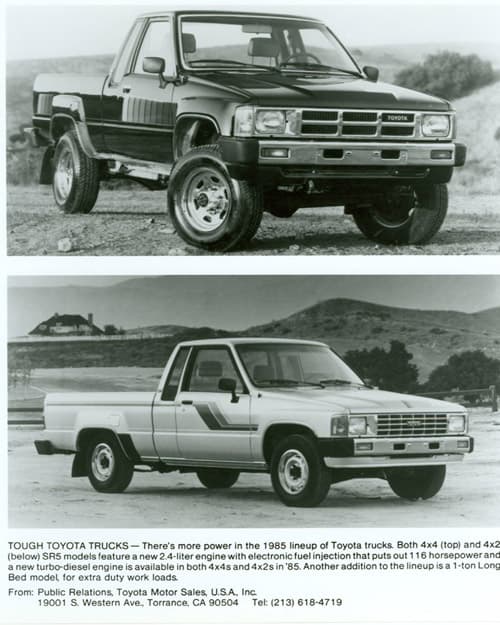
Toyota's mid-80s answer to the sport-truck craze, slotted above the standard SR5 as the performance pickup in the lineup. A factory-intercooled 22R-TE turbocharger pushed the 2.4L to 135 hp and 173 lb-ft, offered only with a 5-speed manual and SR5 trim appointments. Produced for just three model years and heavily modified in the decades since, clean survivors are now one of the most sought-after Toyota trucks of the era.
Add two to four trucks from Garage View, the rarity map, or any variant card.
Common To Unicorn
Pick a dot to jump the garage. Use the plus button when a truck earns a spot in your compare garage.
Toyota Pickup SR5 Turbo
Toyota's mid-80s answer to the sport-truck craze, slotted above the standard SR5 as the performance pickup in the lineup. A factory-intercooled 22R-TE turbocharger pushed the 2.4L to 135 hp and 173 lb-ft, offered only with a 5-speed manual and SR5 trim appointments. Produced for just three model years and heavily modified in the decades since, clean survivors are now one of the most sought-after Toyota trucks of the era.
Toyota Pickup SR5 V6
Toyota's first US compact-truck V6, introduced as the halo powertrain for the 1988 model year and sold alongside the four-cylinder trucks as the new top of the lineup. The 3.0L 3VZ-E produced 150 hp and 180 lb-ft — more than fifty horsepower over the outgoing 22R-E — and was offered with a 5-speed manual or 4-speed automatic in 2WD and 4WD. Only the final year of the 4th-gen body received it, making the 1988 V6 a one-year-only transitional truck and a genuine turning point in how the American market viewed Toyota pickups.
Toyota Pickup SR5 V6
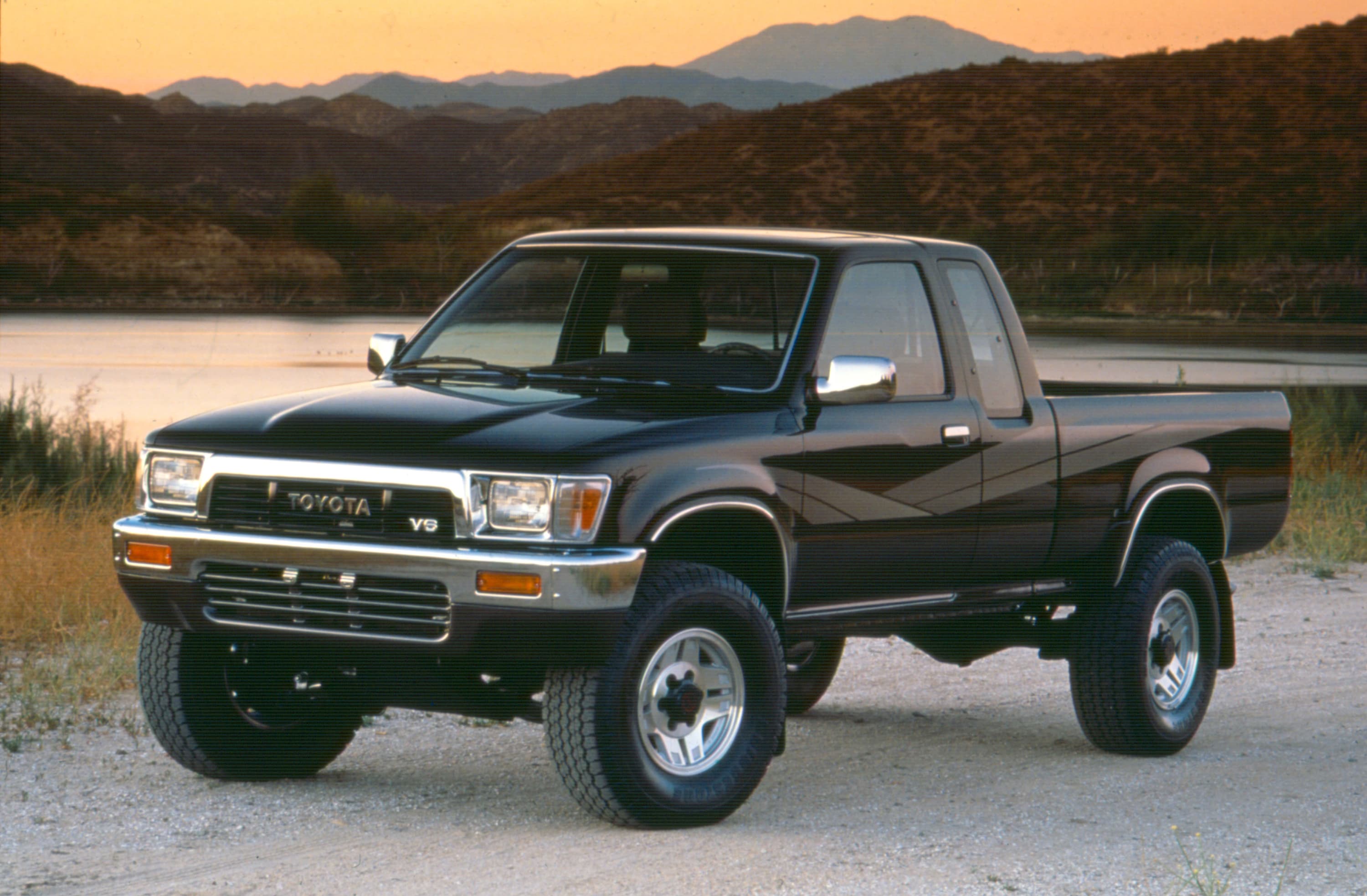
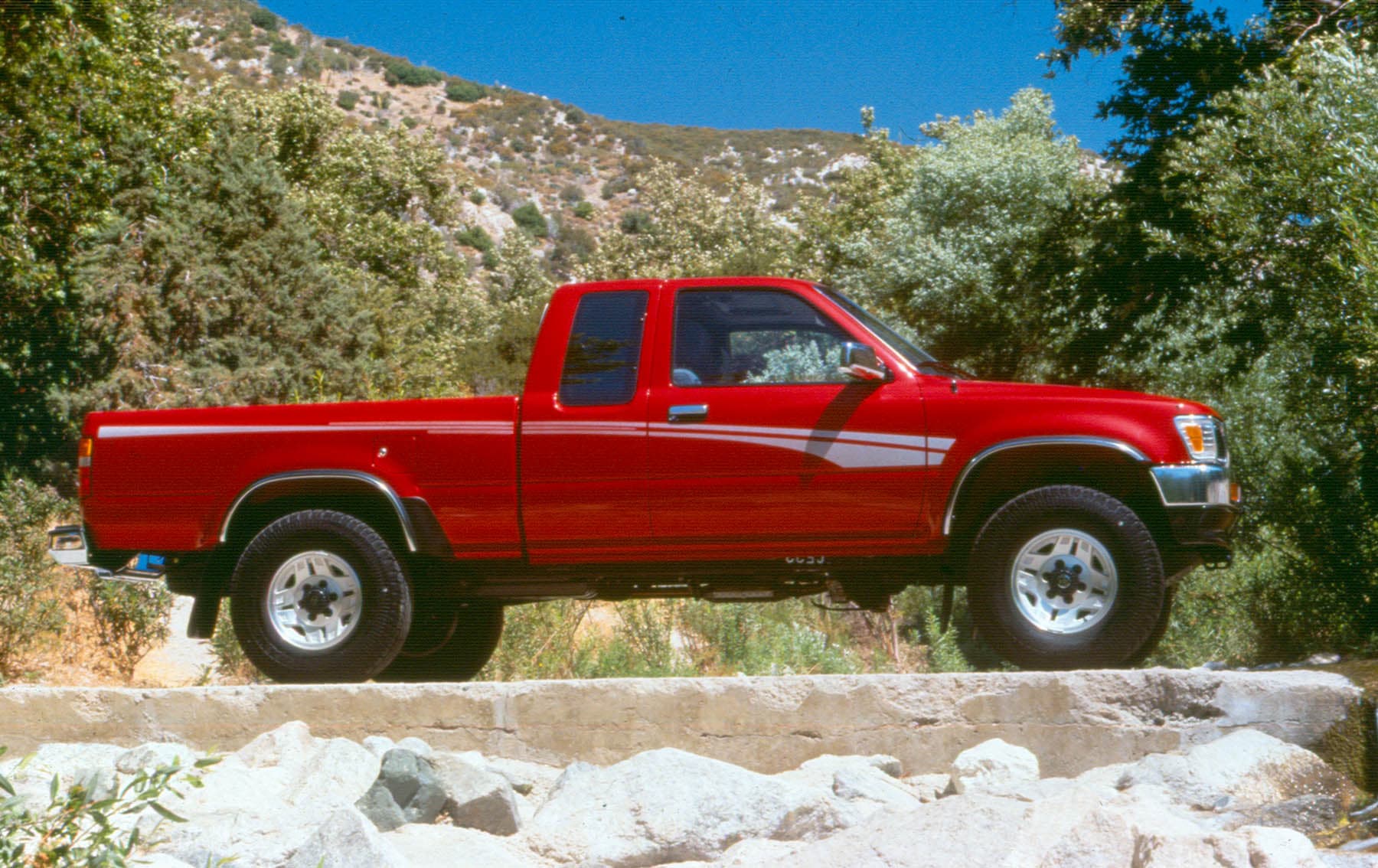
The top-spec 5th-gen Toyota Pickup — SR5 appointments, chrome trim, and the 3.0L V6 stacked into a do-everything family truck that finally matched domestic midsize offerings on paper. The 3VZ-E made 150 hp and 180 lb-ft and was available with a 5-speed manual or 4-speed automatic in 2WD or 4WD, with optional limited-slip differential. Head-gasket issues gave the 3VZ-E a mixed reputation, but well-maintained examples routinely crossed 300,000 miles, and clean V6 4x4 Xtracabs now trade for more than they cost new.
Toyota Pickup Limited V6
Toyota's first true luxury compact truck — a short-run flagship slotted above the SR5 V6 that added leather, power accessories, a unique grille, and color-keyed trim to the top of the 5th-gen lineup. The drivetrain was single-spec: 3.0L 3VZ-E V6, 4-speed automatic, 4WD, Xtracab short bed, no options to delete. Produced only for the final three model years before the Tacoma took over, the Limited is the rarest factory Toyota Pickup sold in North America and a direct spiritual predecessor to the Tacoma Limited that followed.
Tacoma S-Runner V6
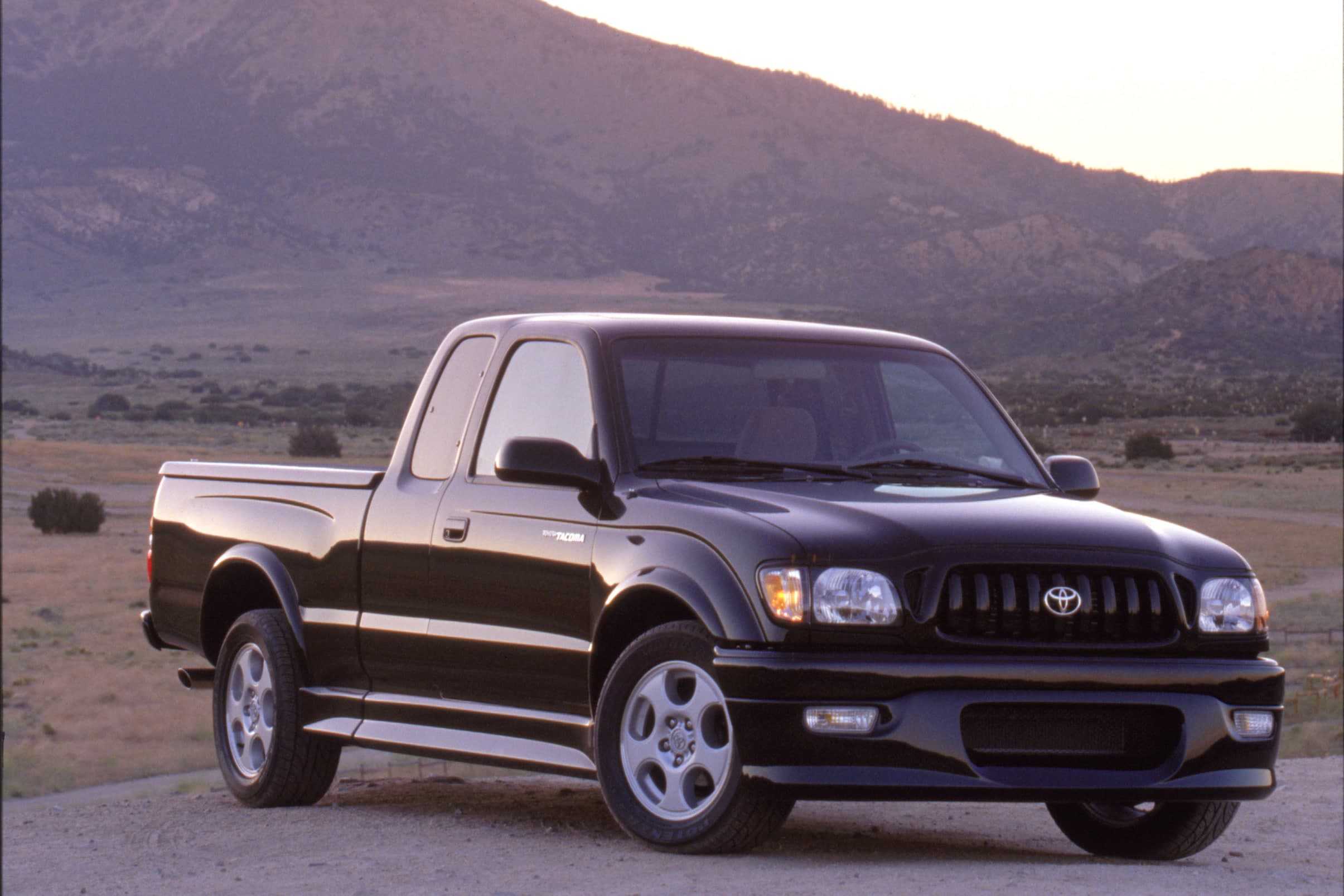
Toyota's street-truck answer to the SVT Lightning and Xtreme S10 — a 2001–2004 Xtracab-only special edition positioned as the anti-off-road Tacoma, sold alongside the PreRunner and TRD Off-Road but aimed entirely at pavement. Mechanically unique: 3.4L 5VZ-FE V6 and 5-speed R150 manual only, 2WD, Tokico gas shocks, front and rear anti-sway bars (the only first-gen Tacoma with a factory rear bar), 16-inch alloys on P235/55R16 rubber, lowered roughly one inch, with a fully color-keyed grille, bumpers, mirrors, handles, and fiberglass fender flares in either Black Sand Pearl or Radiant Red. Toyota's own announcement targeted ~800 units per month, but actual production fell well short — by 2002 the S-Runner was build-to-order, and most independent estimates put true production between 2,200 and 10,000 units total, making it one of the rarest factory Tacomas ever sold.
Toyota Pickup Base / DLX
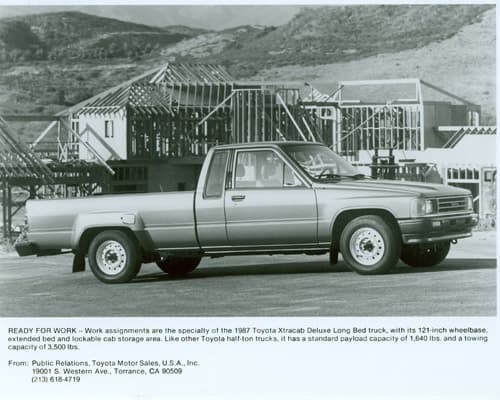
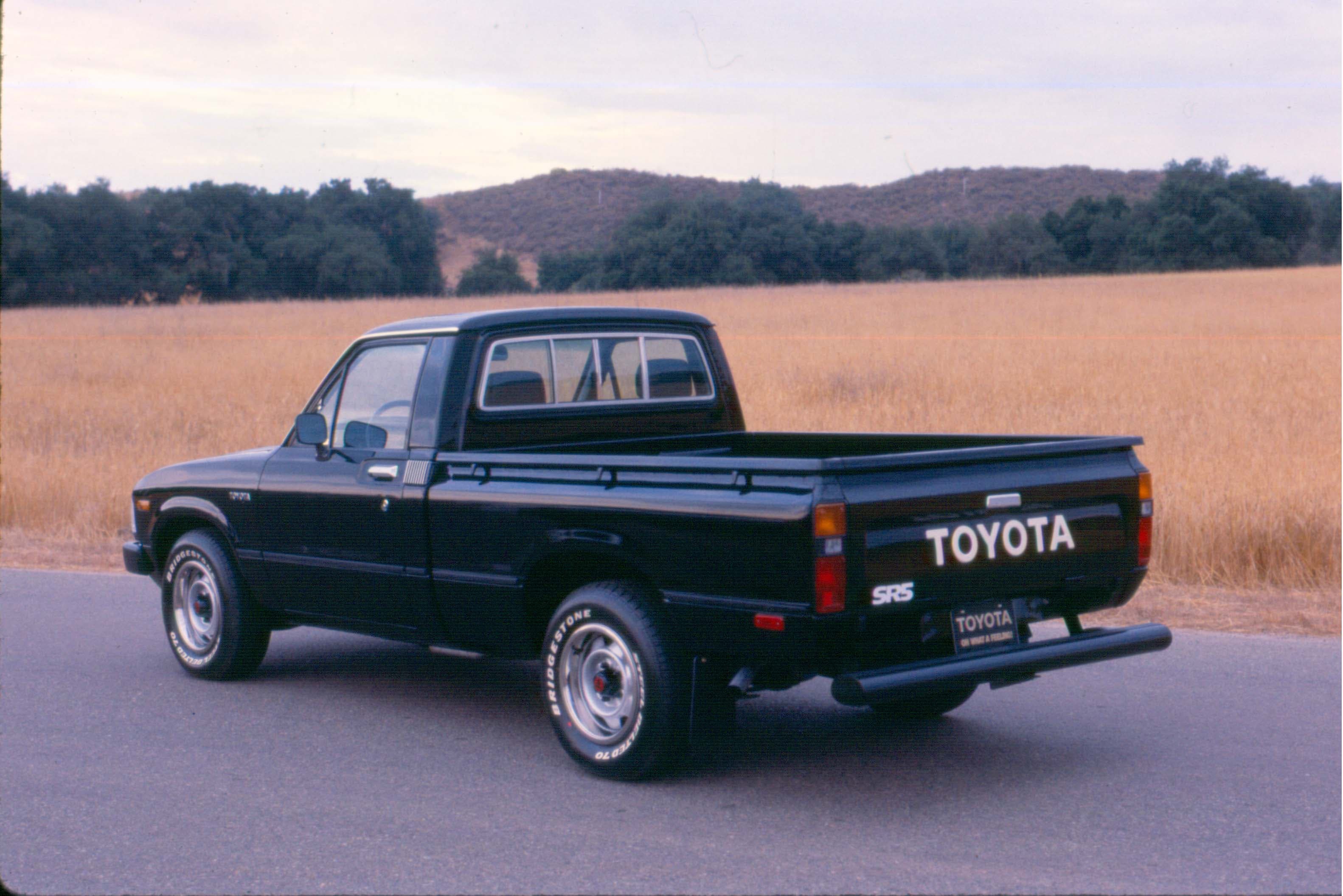
The working-class Toyota that built the brand's American reputation — sold in Regular Cab and Xtracab, 2WD and 4WD, with nothing fancy inside and nothing weak underneath. The carbureted 22R and fuel-injected 22R-E (from 1985) are among the most durable four-cylinders Toyota ever built, paired with a 5-speed manual or 4-speed auto. These are the trucks that racked up 300,000-mile odometers and still show up running on job sites four decades later.
Tacoma TRD Off-Road V6
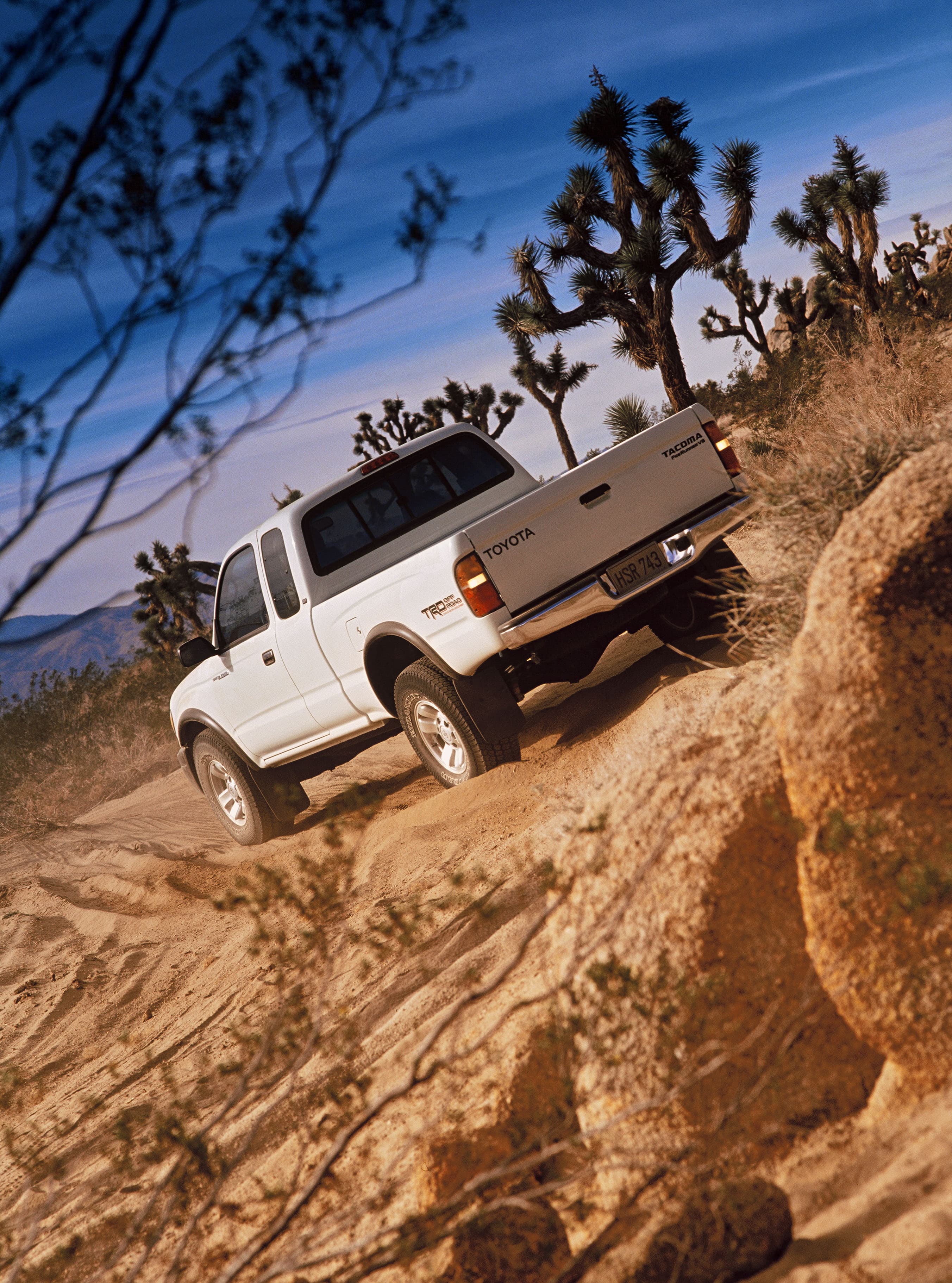
The first factory off-road Tacoma — an optional package from 1998 onward that gave Toyota Racing Development a branded spot in the V6 4WD lineup. The TRD Off-Road package bundled a genuine mechanical rear locker, Bilstein shocks valved for the platform, skid plates, and BF Goodrich all-terrains, while retaining the 3.4L 5VZ-FE V6 in either 5-speed manual or 4-speed automatic. It set the template for every TRD Off-Road and TRD Pro Tacoma that followed and remains the easiest-to-daily capable first-gen you can buy.
Tacoma SR5 V6
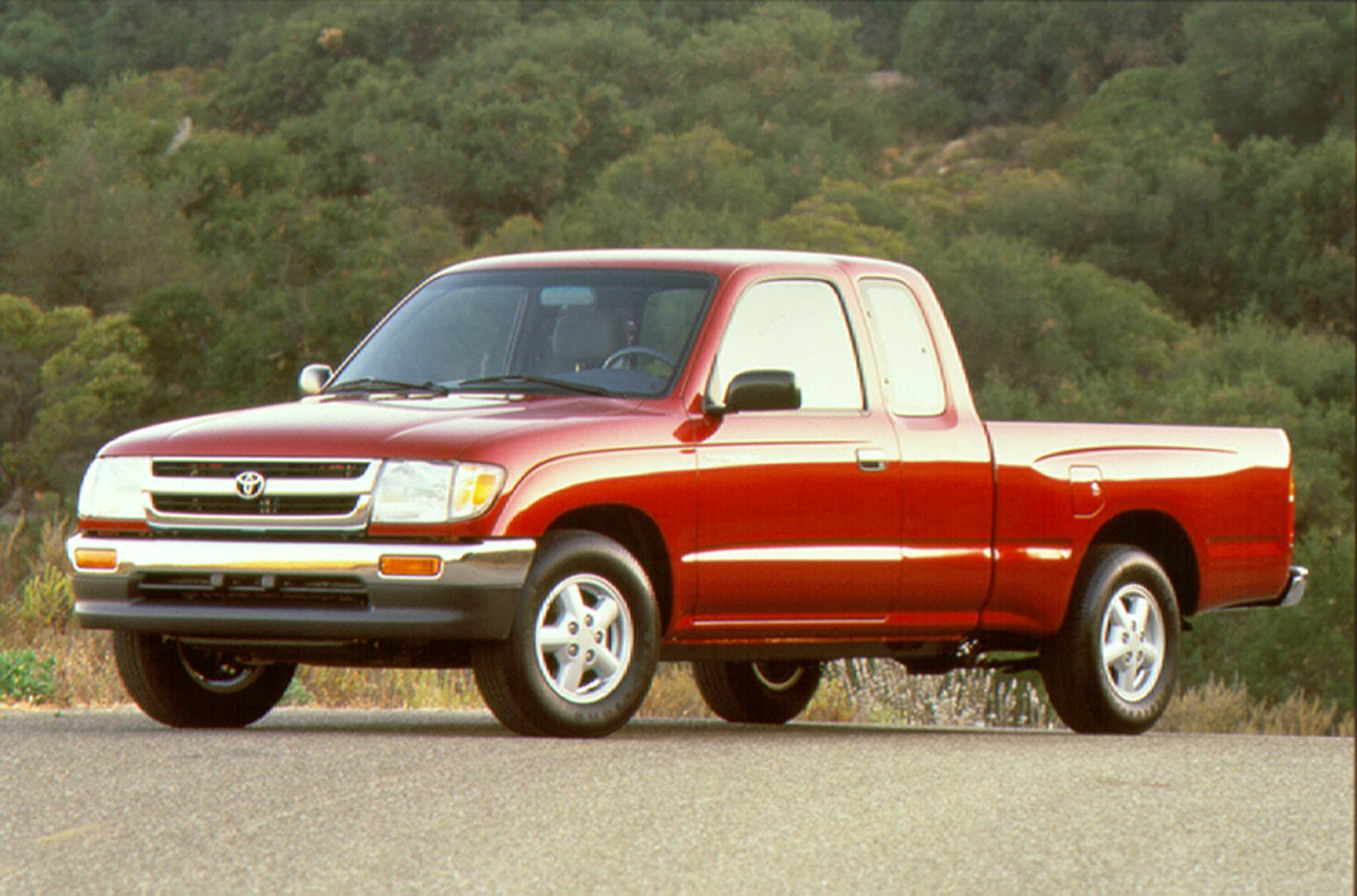
The enthusiast's first-gen Tacoma — positioned as the top-tier V6 before the Limited, pairing the SR5 appearance package with the 3.4L V6 that defined the platform. The 5VZ-FE produced 190 hp and 220 lb-ft and was offered with a 5-speed manual or 4-speed automatic in 2WD, PreRunner, and 4WD, available in every cab style the Tacoma came in. Widely considered one of the most reliable V6 engines Toyota ever built, the SR5 V6 4x4 manual Xtracab is now the single most sought-after first-gen configuration and regularly trades for more than its original window sticker.
Tacoma Limited V6
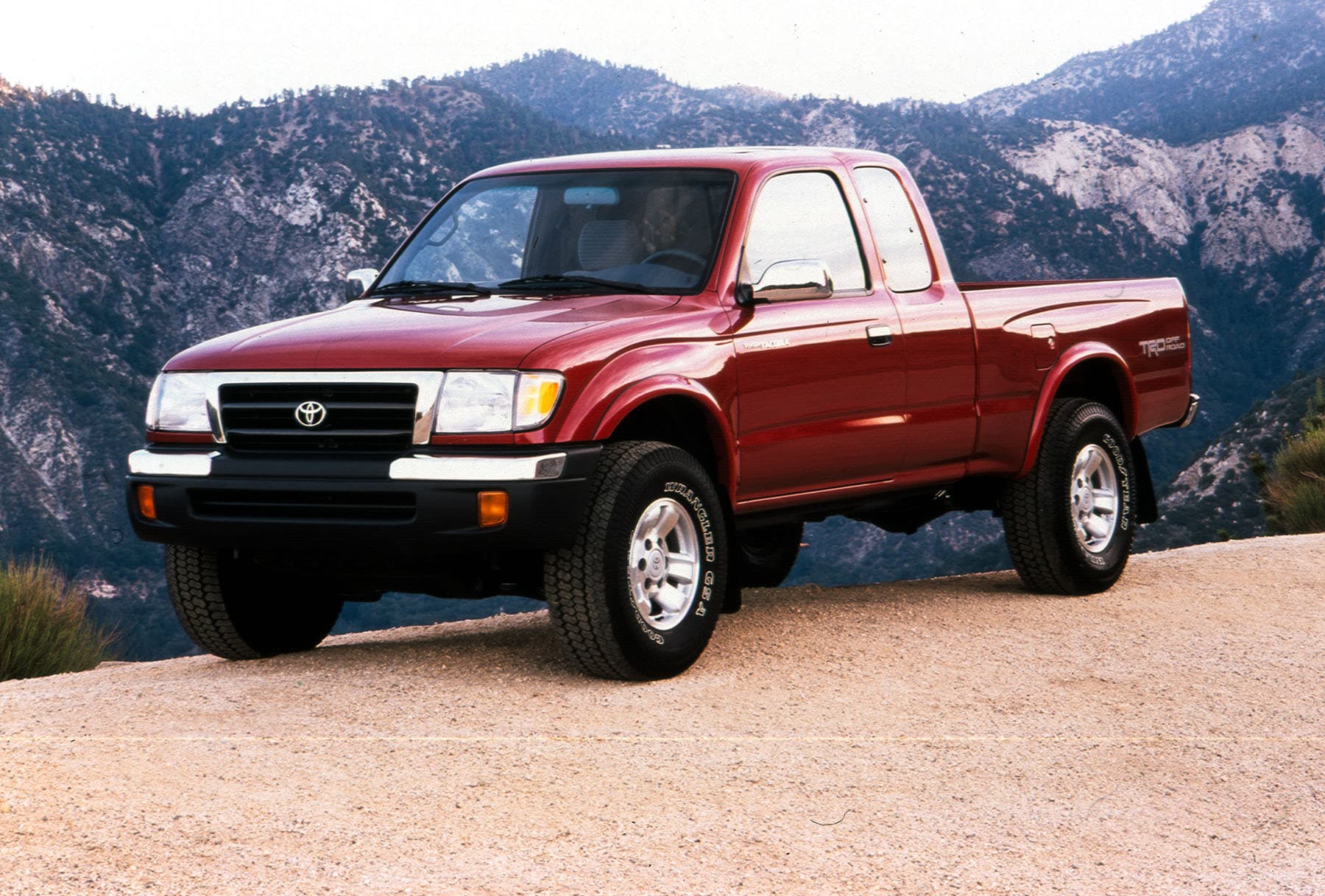
The luxury flagship of the first-generation Tacoma — debuted for the 1998 model year as a renamed top-of-line trim above the SR5 V6, with leather, unique 15-inch alloys, color-keyed bumpers, auto-dimming mirror, and the only factory-available power moonroof in the lineup. Powered exclusively by the 3.4L 5VZ-FE V6 with 4WD, sold as an Xtracab and later as a Double Cab (2001+), with either the 5-speed manual or 4-speed automatic. Produced in much smaller numbers than the SR5, the Limited was Toyota's proof that a compact truck could be genuinely upscale and is the direct ancestor of today's Tacoma Limited and TRD Pro halo trims.
Tacoma T|X Baja Series
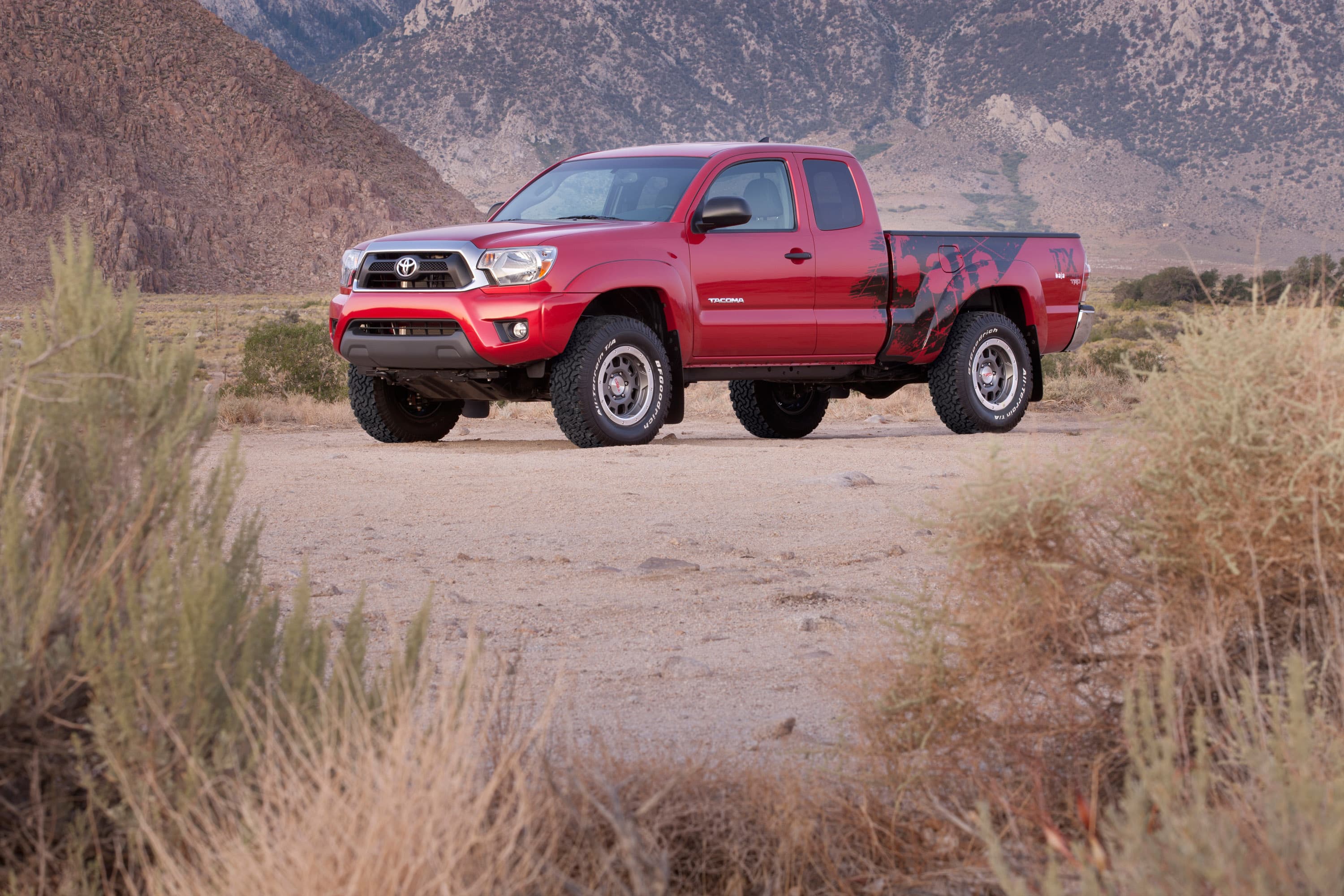
Toyota's limited-production desert package of the second generation — a dealer-optioned Double Cab 4WD Tacoma positioned above the TRD Off-Road as an early response to the Ford Raptor, produced only for the 2012–2013 facelift years (mainland US). The T|X Baja Series added long-travel front suspension, Bilstein shocks tuned for desert use, a TRD cat-back exhaust, heavy-duty skid plates, BF Goodrich all-terrains on unique 16-inch TRD wheels, and a hood scoop, on top of the 4.0L 1GR-FE V6 with a 6-speed manual or 5-speed automatic. The TRD Eaton-Roots supercharger could be stacked to take output to 304 hp / 334 lb-ft. Toyota built only 750 units for 2012 and roughly the same for 2013, making the Baja Series the rarest factory-supported second-gen Tacoma and the immediate conceptual predecessor to the 2017 TRD Pro.
Toyota Pickup Base / DLX
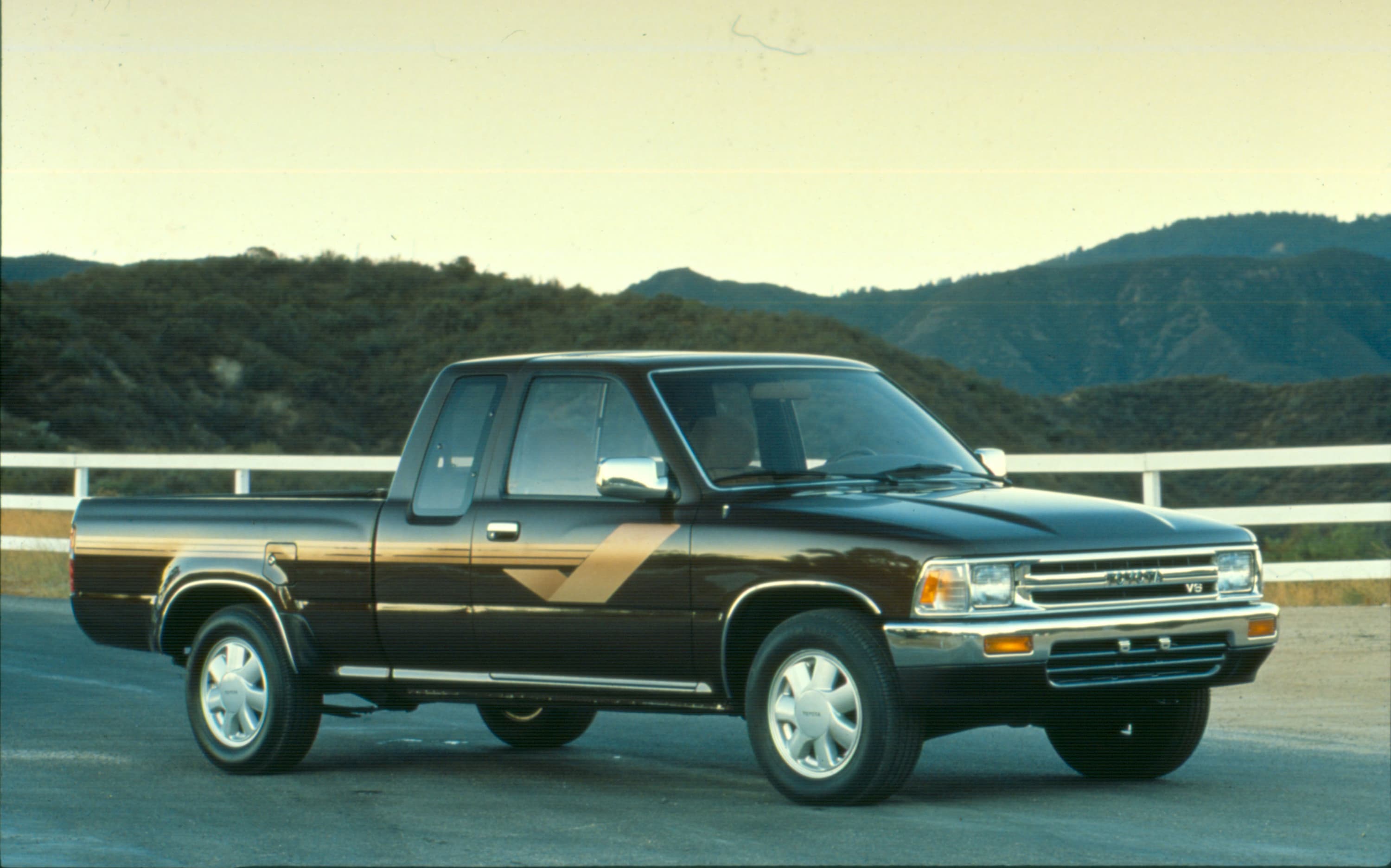
The refreshed 5th-gen Pickup that carried Toyota's compact-truck line from the late 80s through the debut of the Tacoma — softer sheetmetal, a revised cabin, and the same base-workhorse mission. The 22R-E four now made 116 hp and 140 lb-ft, and 4WD models switched from a solid front axle to independent front suspension for a more livable on-road ride. Built in enormous numbers at NUMMI in Fremont, California, many were later recalled and scrapped for frame rust, which is why clean dry-climate survivors command a real premium today.
Tacoma Stepside
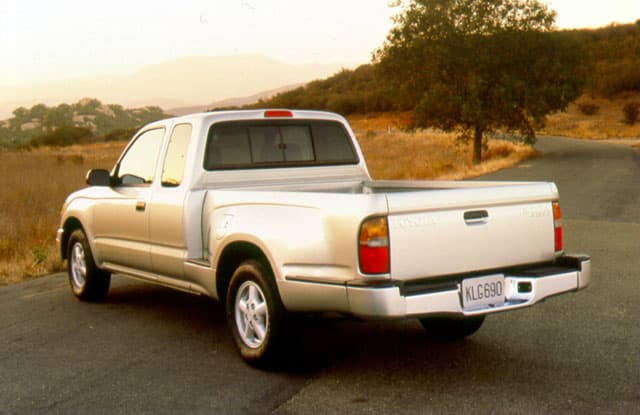
Toyota's fender-side retro bed option, introduced for the 2000 model year and continued through 2003 — a throwback to 1950s fleetside styling applied to the first-generation Tacoma. Sold on Xtracab trucks with either the 2.7L 3RZ-FE four or the 3.4L 5VZ-FE V6, a 5-speed manual or 4-speed automatic, and sharing trim levels with standard-bed trucks. The Stepside cost about 20% of its cargo volume to style and was quietly dropped before the 2004 model year — surviving V6 manual Stepsides are one of the genuine first-gen oddities today.
Interactive breakdowns of rarity, production estimates, and feature availability across every variant.
42 variants ranked by rarity.